
Tea Tree Oil and Intimate Care: Benefits, Uses and Pregnancy
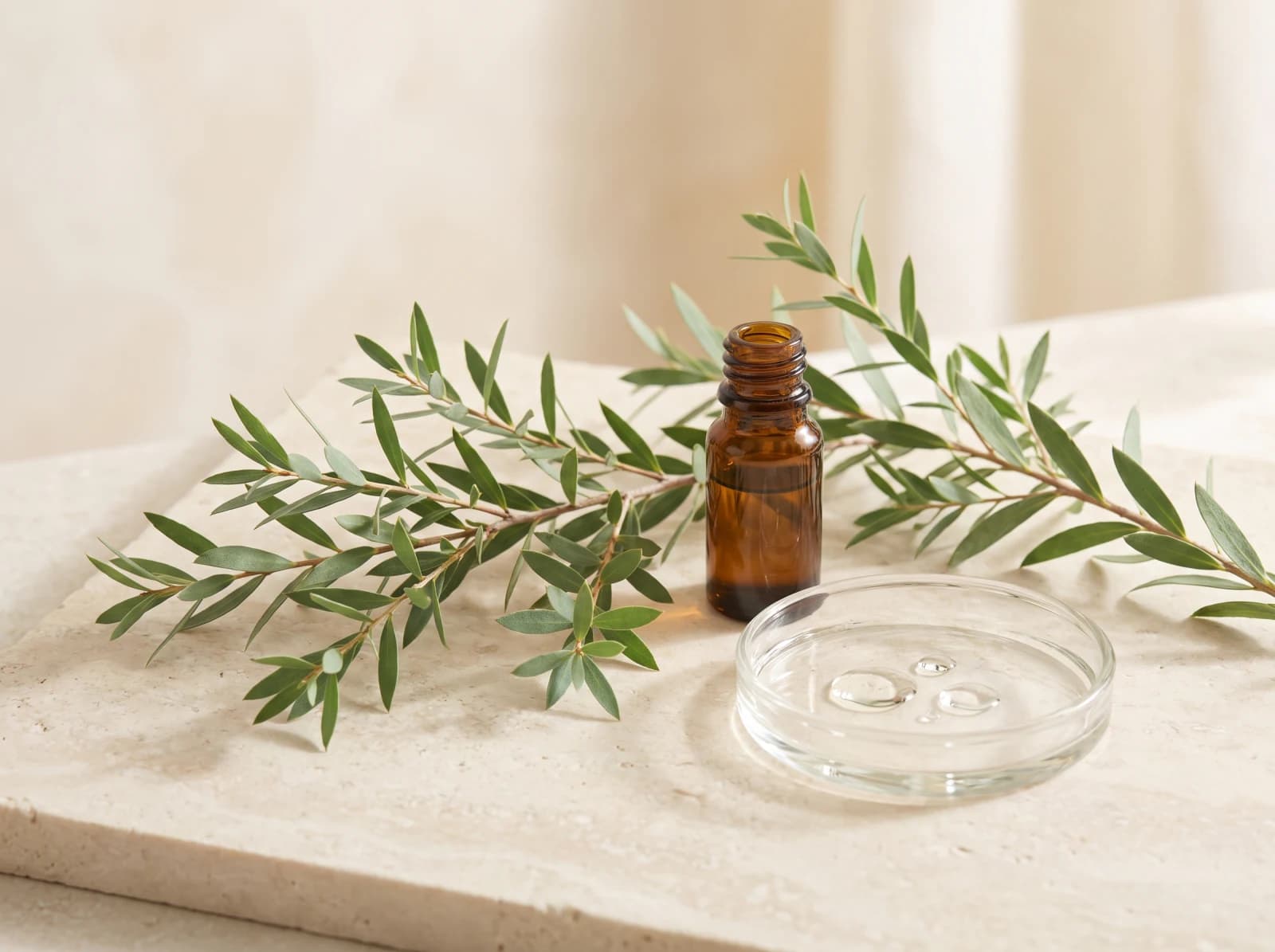
Tea tree oil is a plant-derived essential oil obtained from the leaves of Melaleuca alternifolia.
Used in personal care products for many years, this ingredient has been studied particularly for its antifungal and antimicrobial properties. Naturally occurring constituents such as terpinen-4-ol have also been investigated for antimicrobial and anti-inflammatory properties.
In intimate care, tea tree oil is one of the notable botanical ingredients used in formulations designed to support freshness, a feeling of hygiene, and daily care comfort.
So, what does scientific research say about tea tree oil?
Key properties of tea tree oil
One of the most researched aspects of tea tree oil in scientific literature is its antimicrobial activity against different types of bacteria and fungi. Its activity against fungi is one reason for its use in personal-care formulations. Research has also examined the anti-inflammatory properties of some tea tree oil constituents.
What do studies involving Candida show?
One notable area of tea tree oil research is its antifungal activity against Candida species. Laboratory studies have shown that tea tree oil can inhibit the growth of both Candida albicans and different non-albicans Candida species. A study evaluating 81 Candida albicans and 33 non-albicans Candida isolates reported antifungal activity against Candida species; this activity was also observed in certain intravaginal tea tree oil preparations. Other studies have examined its effects on the growth and biological behaviour of Candida albicans. These findings show that tea tree oil’s antifungal properties against Candida species have been studied scientifically.
Why is it notable in intimate care?
Freshness, moisture, preservation of the natural environment, and daily comfort are connected care needs in the intimate area. Factors such as perspiration, moisture, menstruation, and active daily routines can affect feelings of freshness and comfort. Tea tree oil’s researched antifungal and antimicrobial properties make it a notable botanical ingredient in intimate-care formulations focused on hygiene and freshness.
Why is it used with other ingredients?
Intimate care does not focus on a single need. For this reason, tea tree oil may appear in the same formulation as ingredients with different properties:
- Tea Tree Oil — Notable for its researched antifungal and antimicrobial properties.
- Boric Acid — Notable for research into the vaginal microbial environment and antifungal properties.
- Lactic Acid — Associated with the vagina’s natural acidic environment and pH balance.
- Hyaluronic Acid — Notable for moisture support and sensitive-tissue comfort.
- Vitamin E — Among the ingredients that provide moisture, care, and antioxidant support.
Bringing these ingredients together enables a more holistic care approach that addresses balance, moisture, freshness, and daily intimate comfort together.
Using tea tree oil during pregnancy
In personal-care products, tea tree oil is most commonly used topically, in formulations intended for local application. The US National Center for Complementary and Integrative Health (NCCIH) states that products containing topical tea tree oil may be safe during pregnancy and breastfeeding. Since pregnancy is an individual health journey, consulting an obstetrician before adding a new intimate or personal-care product to a routine is the safest approach.
Conclusion
Tea tree oil is a plant-derived care ingredient whose antifungal and antimicrobial properties have been studied scientifically. Laboratory studies involving Candida species also show that this antifungal activity has been investigated. In intimate care, tea tree oil may be considered a complementary ingredient in formulations that support freshness, a feeling of hygiene, and daily care comfort. Used alongside ingredients with different properties, such as boric acid, lactic acid, hyaluronic acid, and vitamin E, it can form part of a formulation that addresses balance, moisture, freshness, and daily comfort together.
Sources & further reading
- NIH / NCCIH — Tea Tree Oil: Usefulness and Safety (opens in a new tab)
- Carson, Hammer & Riley — Melaleuca alternifolia (Tea Tree) Oil: A Review of Antimicrobial and Other Medicinal Properties (opens in a new tab)
- Hammer et al. — In-vitro activity of tea tree oil and tea tree oil products against Candida spp. (opens in a new tab)
- D'Auria et al. — In vitro activity of tea tree oil against Candida albicans mycelial conversion and other pathogenic fungi (opens in a new tab)
Related Articles

The Secret to Staying Healthy in Modern Life
Staying healthy amid a busy life is not about creating perfect routines; it is about repeating sustainable choices across nutrition, movement, sleep, and stress management.
Read More
High-Fibre Foods During Pregnancy: Why Are They So Important?
Changes in the digestive system during pregnancy can make constipation more common. A fibre-rich diet matters not only for bowel regularity, but also for establishing a balanced dietary pattern.
Read More
Women’s Health During Pregnancy: Supporting the Body and Mind Through Change
Pregnancy is not only a period in which a baby grows; it is a dynamic process in which many systems, from the mother’s nutrition and movement to sleep and mental health, find a new balance.
Read More