
High-Fibre Foods During Pregnancy: Why Are They So Important?
Why does digestion change during pregnancy?
During pregnancy, the body undergoes more than the changes visible from the outside. Hormonal and physical changes caused by the growing uterus can also affect how the digestive system works.
Slower bowel movements during pregnancy and increasing pressure from the uterus on the bowel in later stages can make constipation a more common complaint.
This is where dietary fibre takes on an important role.
But ‘more fibre’ does not mean simply eating bran.
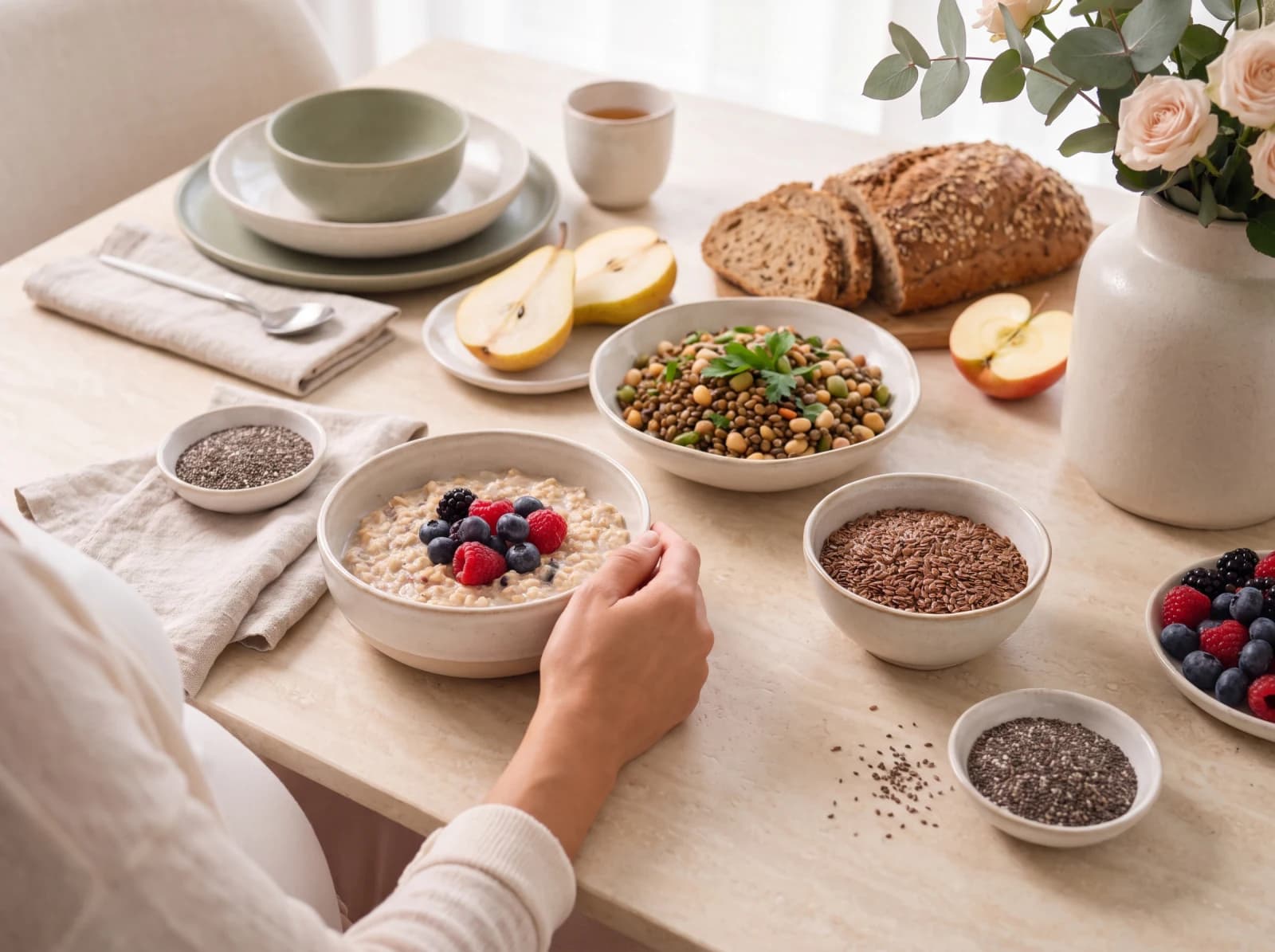
Fibre is a natural component of a broad range of foods, from fruit and vegetables to pulses, whole grains, nuts, and seeds.
What exactly is fibre?
Dietary fibre refers to the components of plant foods that are not completely broken down by our digestive system.
Broadly speaking, there are two groups:
Soluble fibre can form a gel-like structure when it comes into contact with water. Oats, barley, pulses, some fruits, and seeds are important sources.
Insoluble fibre helps add bulk to stools and contributes to bowel transit. Whole grains, vegetables, and some fruits are prominent sources.
In everyday life, many foods contain both types of fibre in different proportions. Rather than searching for a single ‘high-fibre superfood’, variety is therefore more meaningful.
How much fibre during pregnancy?
In international nutrition literature, approximately 28 grams/day of fibre is a commonly used adequate intake reference during pregnancy.
However, you do not have to count every gram each day.
A more practical approach is to spread different sources of fibre across the day.
For example:
- oats and fruit at breakfast,
- lentils, chickpeas, or beans with a meal,
- whole-grain choices for bread or rice,
- fruit and nuts as a snack,
- vegetables alongside main meals.
This approach increases not only the amount of fibre, but also the overall variety of the diet.
What are the best sources of fibre?
Pulses
Lentils, chickpeas, dried beans, and peas provide plant protein and various micronutrients as well as fibre.
Whole grains
Oats, bulgur, whole-grain bread, brown rice, barley, and similar foods generally contain more fibre than refined grains.
Vegetables
Rather than focusing on a single vegetable, bringing different colours to the table increases dietary variety.
Fruit
Apples, pears, blackberries, and similar fruits can contribute to daily fibre intake.
Eating whole fruit rather than drinking only its juice provides an advantage in terms of fibre.
Nuts and seeds
Options such as almonds, walnuts, chia seeds, and flaxseeds also contain fibre.
Because they are energy-dense, however, the amount should be considered in the context of an individual dietary plan.
Is it a good idea to increase fibre suddenly?
Not always.
Increasing fibre intake substantially over a short period can cause bloating, gas, and abdominal discomfort in some people.
For this reason, when moving from a low-fibre diet to a higher-fibre pattern, a gradual increase may be better tolerated.
Fluid intake is also important.
ACOG generally recommends aiming for 8–12 cups of water throughout the day during pregnancy.
Individual needs can vary according to temperature, activity, and health status.
Constipation is not caused only by a lack of fibre
This distinction matters.
Constipation during pregnancy can be affected by different factors, including hormones, physical changes, activity levels, and certain medicines or supplements.
If you experience significant or persistent constipation despite consuming fibre, continually adding products or laxatives on your own may not be the right approach.
It is appropriate to consult a healthcare professional before using a laxative or similar product during pregnancy.
Is a fibre supplement necessary?
For most people, the first goal should be to meet fibre needs through a variety of foods.
If adequate intake cannot be achieved through food, or constipation has become a significant problem, a doctor or dietitian may consider fibre-containing products in some cases.
Being ‘natural’ or available without a prescription does not automatically mean that a product is suitable for everyone during pregnancy.
Conclusion
Fibre during pregnancy is not a dietary component to remember only when discussing constipation.
It is a natural part of a diet rich in fruit, vegetables, pulses, and whole grains, and an important element of a varied dietary pattern throughout pregnancy.
The aim is not to consume as much fibre as possible in a single day, but to balance fibre, fluids, movement, and the overall diet together.
Sources & further reading
Related Articles

The Secret to Staying Healthy in Modern Life
Staying healthy amid a busy life is not about creating perfect routines; it is about repeating sustainable choices across nutrition, movement, sleep, and stress management.
Read More
Tea Tree Oil and Intimate Care: Benefits, Uses and Pregnancy
What does scientific research say about tea tree oil’s antifungal and antimicrobial properties, studies involving Candida, its role in intimate care, and topical use during pregnancy?
Read More
Women’s Health During Pregnancy: Supporting the Body and Mind Through Change
Pregnancy is not only a period in which a baby grows; it is a dynamic process in which many systems, from the mother’s nutrition and movement to sleep and mental health, find a new balance.
Read More