
The Secret to Staying Healthy in Modern Life

Health sometimes begins more simply than we think
Waking up at six, going to the gym every day, never eating sugar, taking dozens of supplements without fail...
Modern wellness culture can sometimes turn healthy living into a checklist that is difficult to follow. Yet the shared message of evidence-based health guidance is much simpler: Most habits that protect health are not dramatic; they are repeatable.
Eating a little more vegetables at one meal, walking during the day, not continually postponing sleep, recognising when stress has become chronic, and seeking professional support when needed... Choices that seem small on their own can complement one another over time.
The ‘secret’ to staying healthy in modern life is therefore not a single superfood, product, or routine; it is not neglecting the body’s fundamental needs over the long term.
1. Variety, not perfection, in nutrition
Healthy eating often begins with the question, ‘What should I avoid?’ A more useful question might be:
Am I adding enough nutritious foods to my daily diet?
The World Health Organization recommends that a healthy dietary pattern include different food groups such as vegetables, fruit, pulses, nuts, and whole grains. For people over the age of ten, at least 400 grams of vegetables and fruit a day and at least 25 grams of dietary fibre are among the principal targets in current WHO guidance.
There is no need to calculate these figures at every meal. A more realistic approach may be to consider the overall composition of the plate:
- Is there a variety of vegetables and fruit?
- Are whole grains and pulses included often enough?
- Are protein sources varied?
- Have highly processed products become central to the daily diet?
- Is drinking water something remembered only when thirst sets in?
Healthy eating is less about eating ‘very well’ for one week and abandoning it the next, and more about making choices that are good enough on most days.
2. Movement does not happen only at the gym
One of the paradoxes of modern life is that we can be very busy throughout the day while moving very little physically.
For adults, the WHO recommends 150–300 minutes of moderate-intensity aerobic activity per week, or the equivalent amount of more vigorous activity. Muscle-strengthening activities on at least two days a week are also among the recommendations.
But this entire target does not have to be achieved at the gym.
Brisk walking, taking the stairs, cycling, gardening, or adding short movement breaks throughout the day are all forms of physical activity.
The important idea here is this:
There is a broad and valuable space between ‘I did nothing’ and ‘I did it perfectly.’
A 20-minute walk on a busy day is more valuable than no movement at all.
3. Sleep is not time left over from the day
During busy periods, sleep is often the first thing to be sacrificed.
Yet sleep is not simply rest. It is closely linked with attention, memory, mood, metabolic health, and everyday performance.
The NIH generally recommends 7–9 hours of sleep a night for adults, while the CDC cites at least 7 hours as a basic reference for adults.
Duration is not the only factor that matters.
Going to bed at very different times each night, intensive screen use immediately before bed, too much caffeine late in the day, or frequently interrupted sleep can also make it difficult to feel rested.
Good sleep hygiene often does not require major changes:
- keeping sleep times as regular as possible,
- creating a calmer transition before sleep,
- avoiding high caffeine intake late at night,
- making the bedroom suitable for sleep.
4. What matters is not eliminating stress, but keeping it manageable
Stress is a natural part of life. The problem arises when it becomes constant and the body has no opportunity to rest.
The WHO notes that regular daily routines, physical activity, adequate sleep, and social connection may help with managing stress.
Sometimes, rather than ‘trying to be more disciplined’, it is more useful to ask:
Which part of my life is continually causing me to operate beyond my capacity?
If sleep problems, intense anxiety, persistent fatigue, or stress that affects daily functioning continue for a long time, they should not be dismissed simply as a ‘busy period’.
5. Where do supplements fit in?
Supplements are not shortcuts that replace a healthy diet.
However, a person’s stage of life, dietary pattern, laboratory findings, or assessment by a healthcare professional may alter the need for certain micronutrients.
For example, there are specific recommendations for certain vitamins and minerals during particular stages such as pregnancy.
A sound approach is therefore to move away from asking ‘What is everyone else taking?’ and instead ask:
What do I actually need?
That is the question worth asking.
People who take regular medication, have a chronic condition, are pregnant, or are breastfeeding should discuss supplement choices with a healthcare professional.
Conclusion: Healthy living is not a performance
Health is not about creating a perfect morning routine and never departing from it for the rest of your life.
It is about finding a sustainable balance between eating well, moving, sleeping, resting, and noticing the signals your body sends.
Some days, everything goes according to plan. On other days, it does not.
Over the long term, what makes the difference is usually not a single ‘perfect day’, but having sound habits you can return to.
Sources & further reading
- World Health Organization — Healthy Diet (opens in a new tab)
- World Health Organization — Guidelines on Physical Activity and Sedentary Behaviour (opens in a new tab)
- NIH / NHLBI — How Much Sleep Is Enough? (opens in a new tab)
- World Health Organization — Stress (opens in a new tab)
- NIH Office of Dietary Supplements — Pregnancy Fact Sheet for Health Professionals (opens in a new tab)
Related Articles
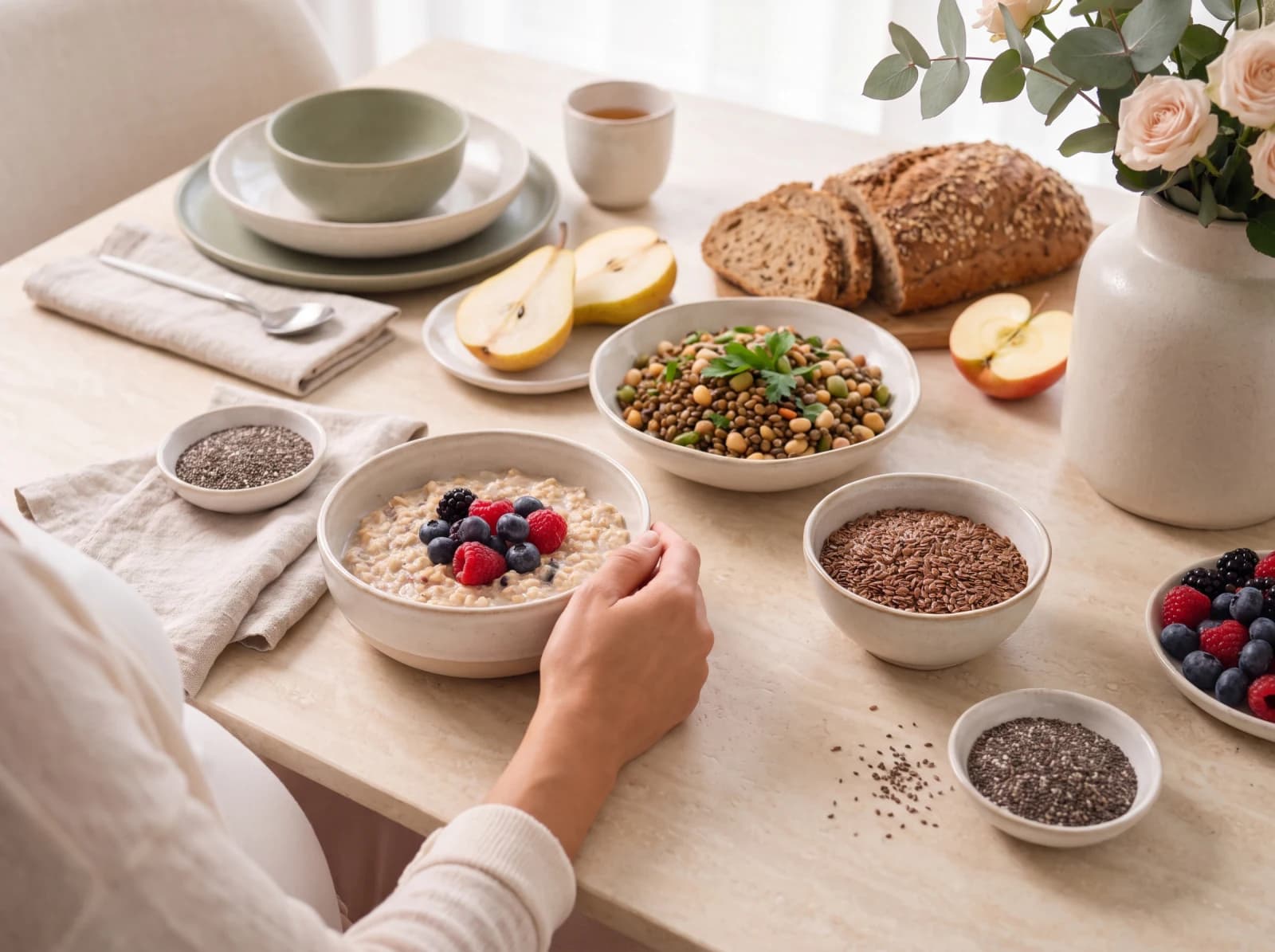
High-Fibre Foods During Pregnancy: Why Are They So Important?
Changes in the digestive system during pregnancy can make constipation more common. A fibre-rich diet matters not only for bowel regularity, but also for establishing a balanced dietary pattern.
Read More
Tea Tree Oil and Intimate Care: Benefits, Uses and Pregnancy
What does scientific research say about tea tree oil’s antifungal and antimicrobial properties, studies involving Candida, its role in intimate care, and topical use during pregnancy?
Read More
Women’s Health During Pregnancy: Supporting the Body and Mind Through Change
Pregnancy is not only a period in which a baby grows; it is a dynamic process in which many systems, from the mother’s nutrition and movement to sleep and mental health, find a new balance.
Read More